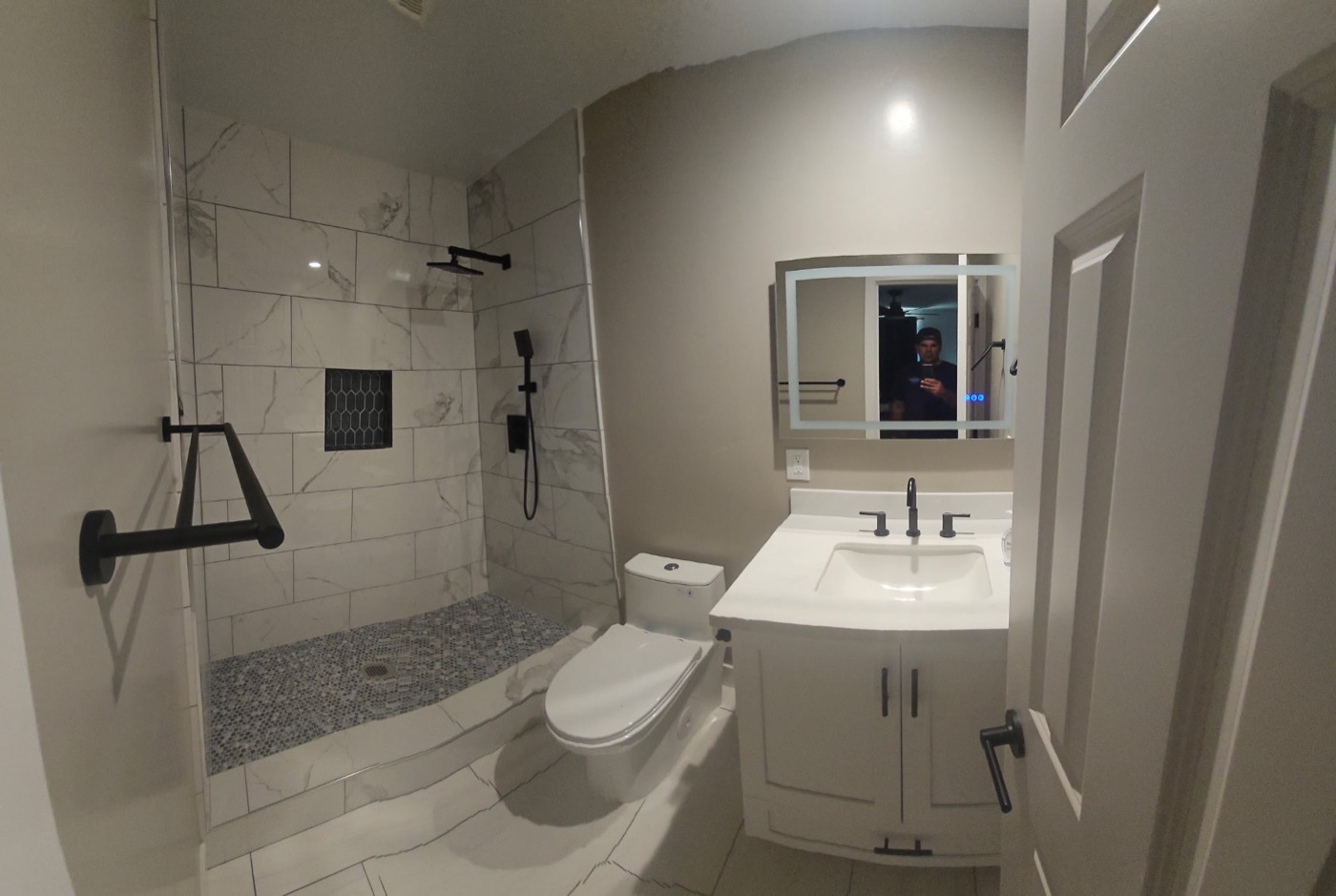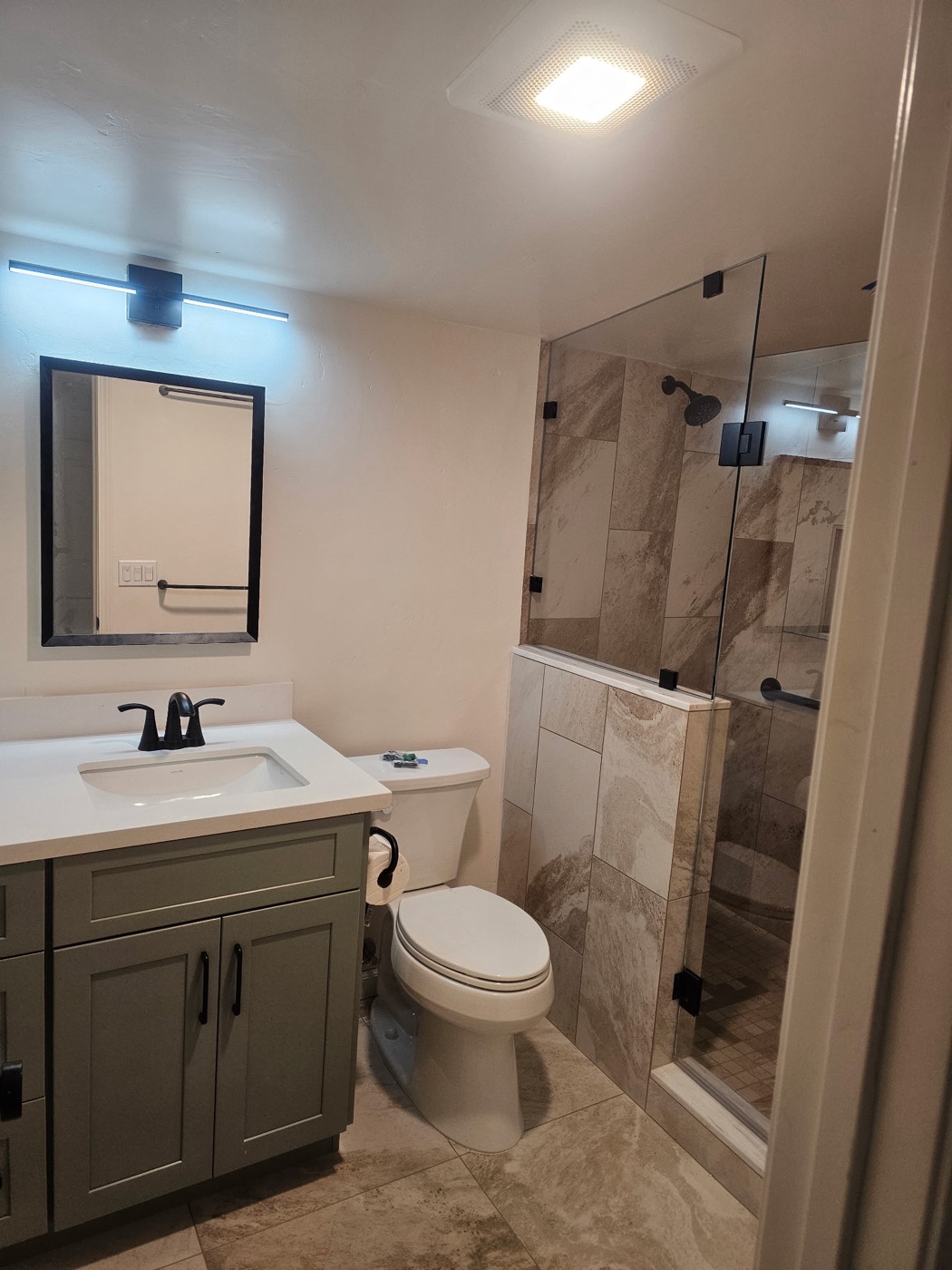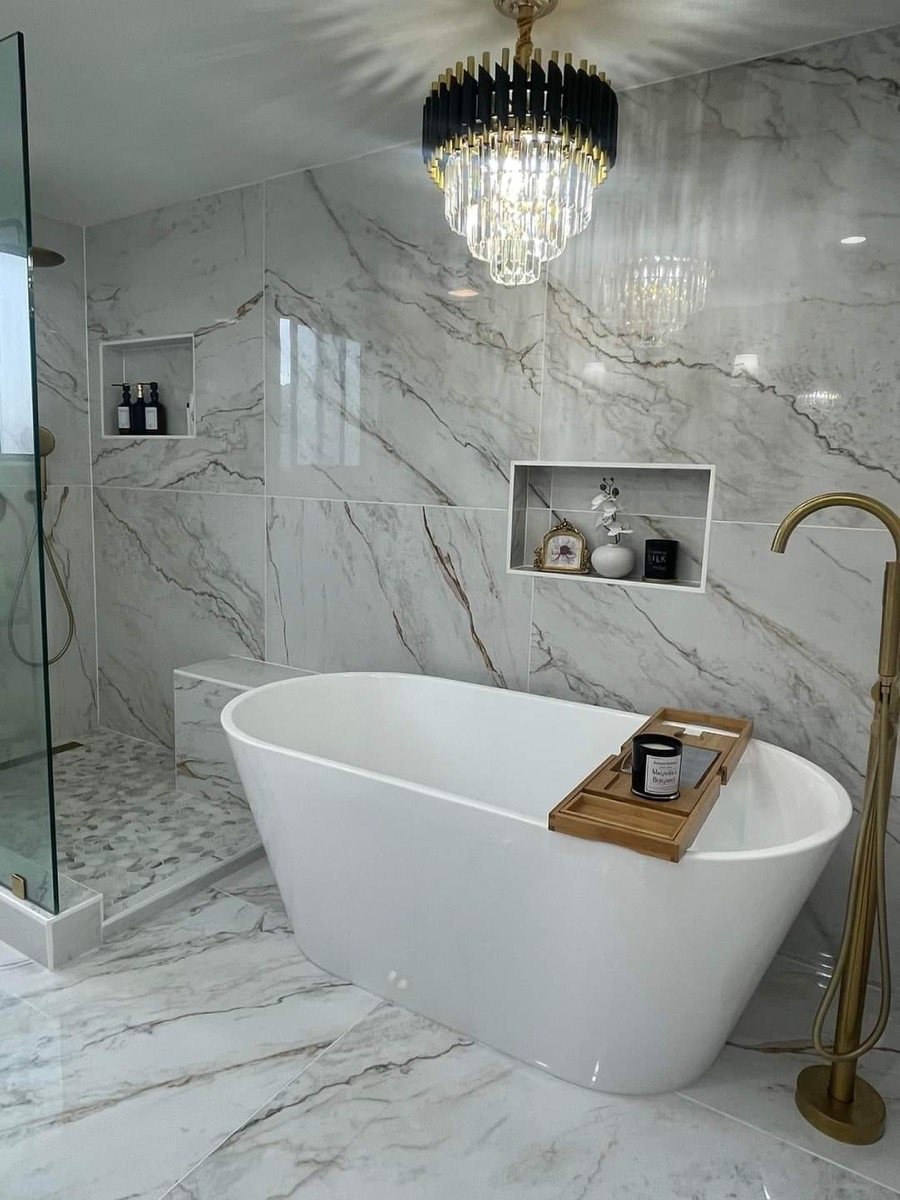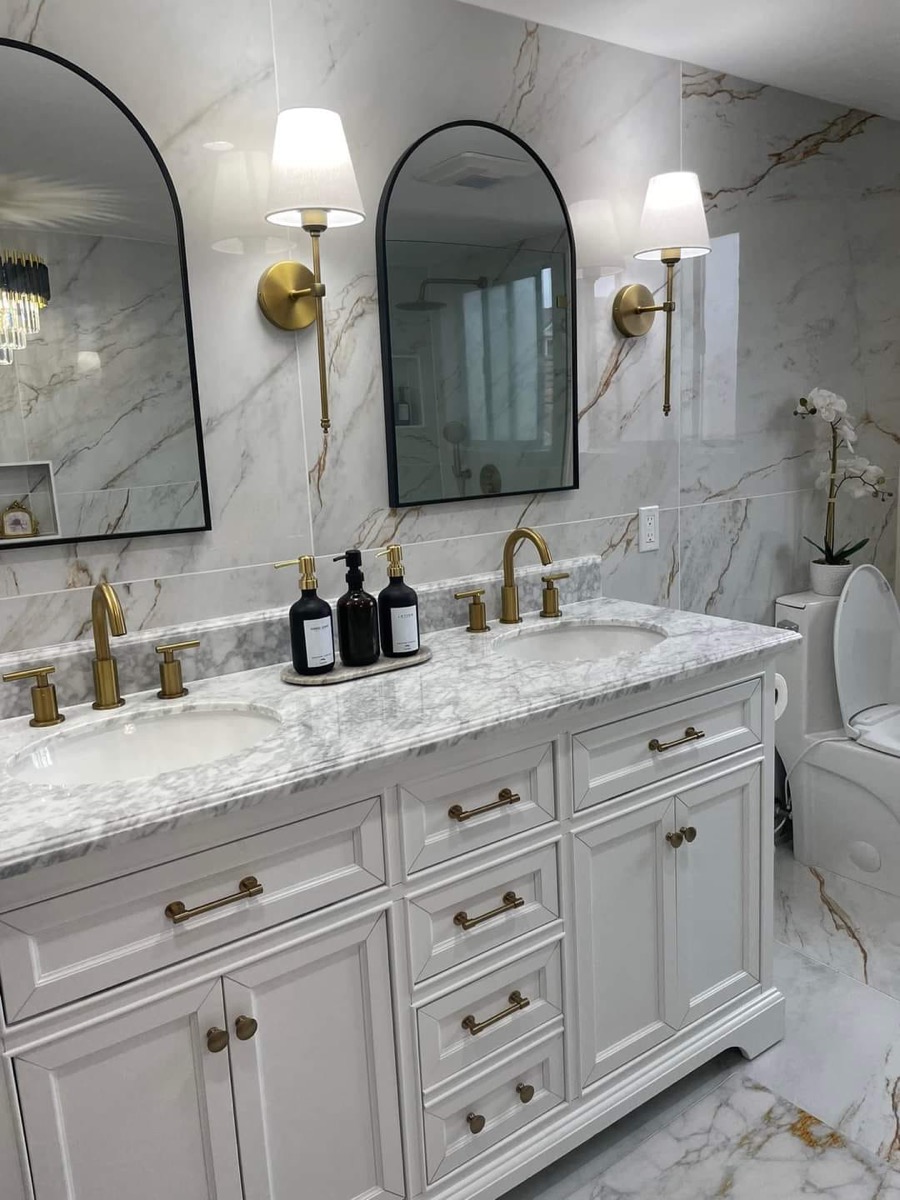
Walk-in showers, tub conversions, new tile and vanities, and primary suites, built to look right and stay dry ten years from now.
Plan My Bathroom
Tile gets the attention, but it isn't what keeps water out of your walls. Grout and a lot of tile let moisture through. What stops it is the layer underneath: a waterproof membrane, a properly sloped shower pan, and careful work at every corner, niche and valve. When a ten-year-old shower starts leaking into the hallway, that's almost always where someone cut a corner.
Plenty of older San Diego bathrooms share the same story: a builder-grade tub with a showerhead over it, one sink where two are needed, a fan that vents into the attic or barely runs, and plumbing that has been patched more than once. Houses from the middle of the last century add old galvanized pipe and cast-iron drain lines to the list.
We remodel guest baths, hall baths shared by the kids, and primary suites, from a straight swap of fixtures and tile to a full rework with walls and plumbing in new places.
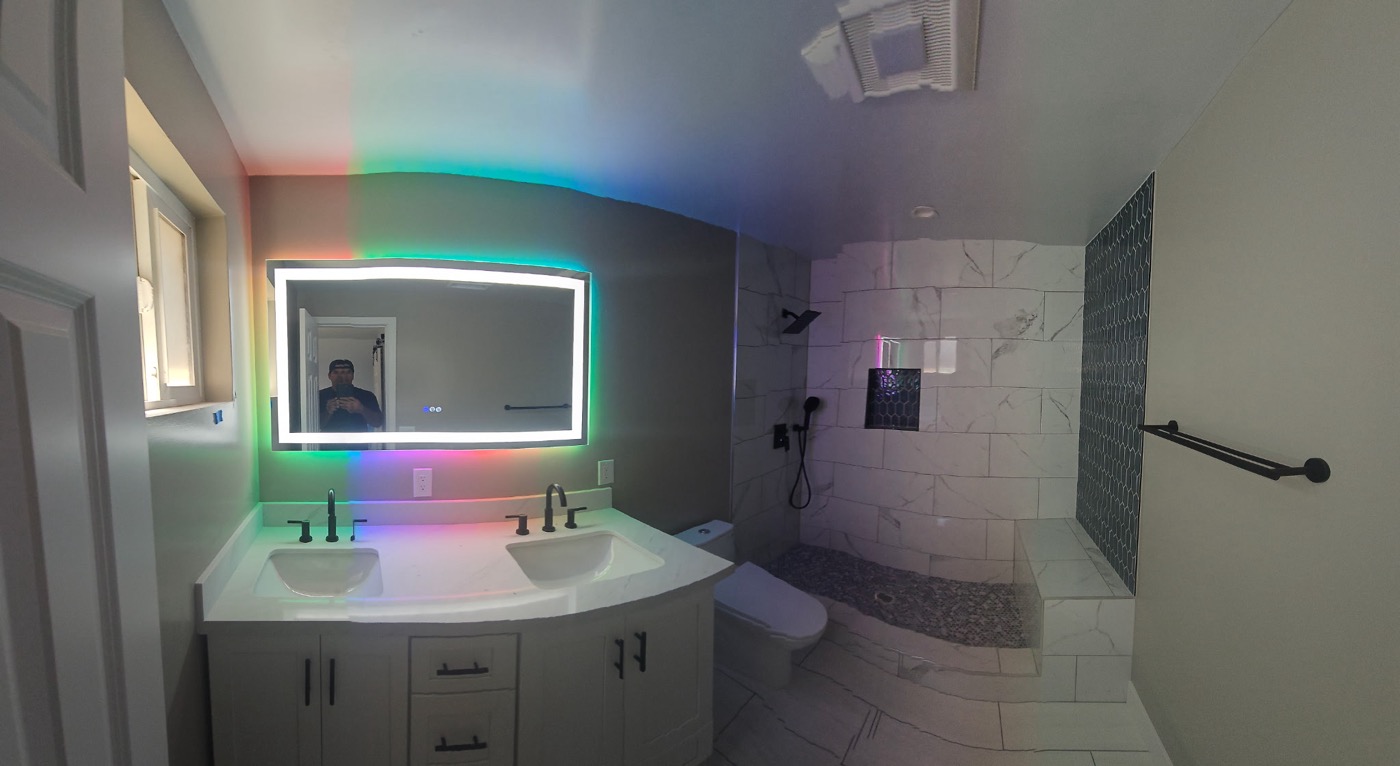
Swapping a little-used tub for a walk-in shower comes up all the time. It works well in a hall bath or primary suite, but think twice before removing the only tub in the house if you have small children or expect to sell to a young family. If we think the tub should stay, we'll say so.
A curbless shower, with no step at the entry, looks clean and is easier to use as you get older, but the floor has to slope to the drain, which usually means recessing the subfloor or raising the rest of the room. That takes more planning on a slab foundation than over a crawlspace. Shower doors and panels must be tempered safety glass, and every shower valve needs anti-scald protection, so both are built into every design from the start.
California has some of the tightest water limits in the country, and new fixtures have to meet them: toilets can use no more than 1.28 gallons per flush, showerheads no more than 1.8 gallons per minute, and bathroom faucets no more than 1.2. Current fixtures hit those numbers without feeling weak, but it's worth knowing before you order a rainfall head online.
Ventilation is the other big one. A bathroom with a shower or tub needs an exhaust fan vented outside, and under CALGreen that fan has to be ENERGY STAR rated and run by a humidity control unless it's part of a whole-house ventilation system. In damp coastal neighborhoods like La Jolla and Del Mar, a fan that actually runs is the cheapest mold prevention there is.
A primary bath remodel often grows into a suite project: borrowing space from a closet or bedroom, adding a second sink, giving the toilet a room of its own, or trading a cramped tub for a big shower with a bench. A double vanity generally wants at least five feet of wall to be comfortable, which is a good first test of whether a layout can work.
If you plan to stay in the house for the long haul, have wood blocking added inside the shower walls during construction so grab bars can go up later without disturbing the tile. It costs very little while the walls are open and a great deal afterward.
Construction on a single bathroom usually runs a few weeks once materials are on hand. Tile work and the plumbing and waterproofing inspections set the pace, and moving walls or drains adds time. Your estimate comes with a schedule.
Replacing a vanity or toilet in place usually doesn't need one. Moving plumbing, adding circuits or a new fan, rebuilding a shower down to the framing, or moving walls generally does. We take care of permits and inspections whenever they're required.
A standard walk-in shower has a low curb at the entry to hold the water in. A curbless shower has none, so the floor itself slopes toward the drain, often a linear drain along one edge. Curbless designs need more floor preparation, especially on a concrete slab.
If it's the only tub in the house and you have young children, or you may sell to a family, keeping one is usually wise. In a primary suite where nobody takes baths, a larger shower is often the better use of the space.
By treating waterproofing as its own step. We install a continuous membrane under the tile, slope the shower floor to the drain, seal every niche and pipe penetration, and vent the room outside with a properly sized fan. Bathroom leaks usually trace back to a shortcut in one of those places.
Often. For period houses in neighborhoods like North Park, we can source tile in classic sizes and patterns, such as small hexagon floors or subway walls, along with traditional-looking fixtures that still meet today's water limits.
Tell us what doesn't work about the bathroom you have now. Chris will look at the space, the plumbing and the options, then put a price on it in writing.